Liquidation Closeouts 101
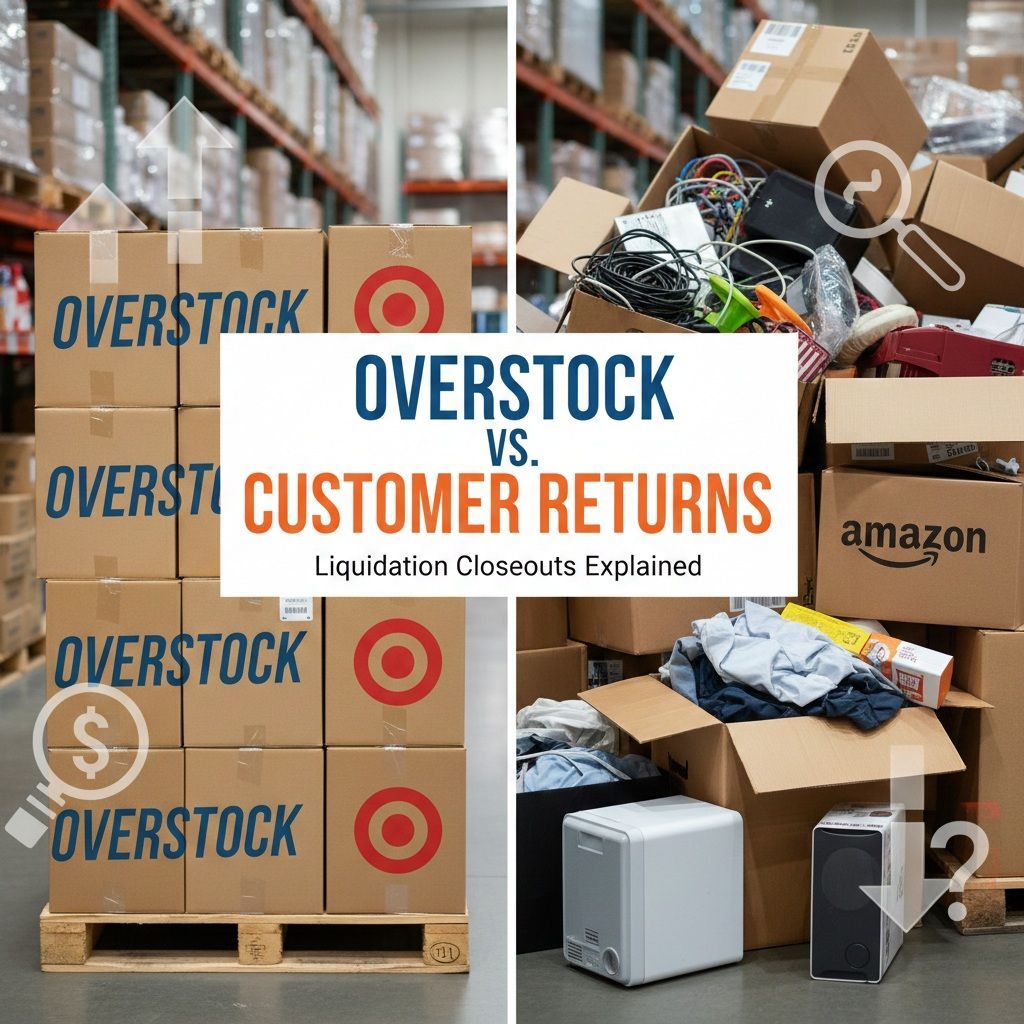
Overstock vs. Customer Returns
Liquidation closeouts are one of the most effective ways for resellers to source brand-name merchandise at deeply discounted prices.
However, not all liquidation inventory is the same. Understanding the difference between overstock and customer returns is critical before purchasing a truckload.
What Are Liquidation Closeouts?
Liquidation closeouts are large quantities of merchandise sold below retail value by major department stores and online retailers. These products may include excess inventory, discontinued items, seasonal overstock, or customer returns.
Retailers liquidate this merchandise to recover capital, while buyers such as bin stores, flea market vendors, pallet flippers, and discount retailers resell it for profit.
What Is Overstock Inventory?
Overstock inventory consists of brand-new merchandise that never sold at retail. These items often come from overproduction, discontinued SKUs, or seasonal transitions.
- Brand-new items in original packaging
- Consistent condition across loads
- Lower labor requirements
- Ideal for retail or online resale
Overstock loads are commonly found in large programs such as Amazon liquidation truckloads and Target overstock truckloads.
What Are Customer Returns?
Customer returns are items that were previously purchased and sent back by customers. These loads can vary widely in condition.
- Open-box or lightly used items
- Mixed-condition merchandise
- Lower cost per unit
- Higher profit potential with more labor
Returns are commonly included in mixed truckloads from major retailers such as Amazon and Target.
Overstock vs. Returns: Which Is Right for You?
If you prefer predictable inventory and minimal processing, overstock liquidation is usually the better option. If you operate a bin store or flea market and are comfortable sorting inventory, customer returns can offer higher margins.
Key Takeaway
Understanding the difference between overstock and customer returns helps you make smarter buying decisions when purchasing liquidation closeouts. The more informed you are, the stronger your resale strategy becomes.
More Related Posts