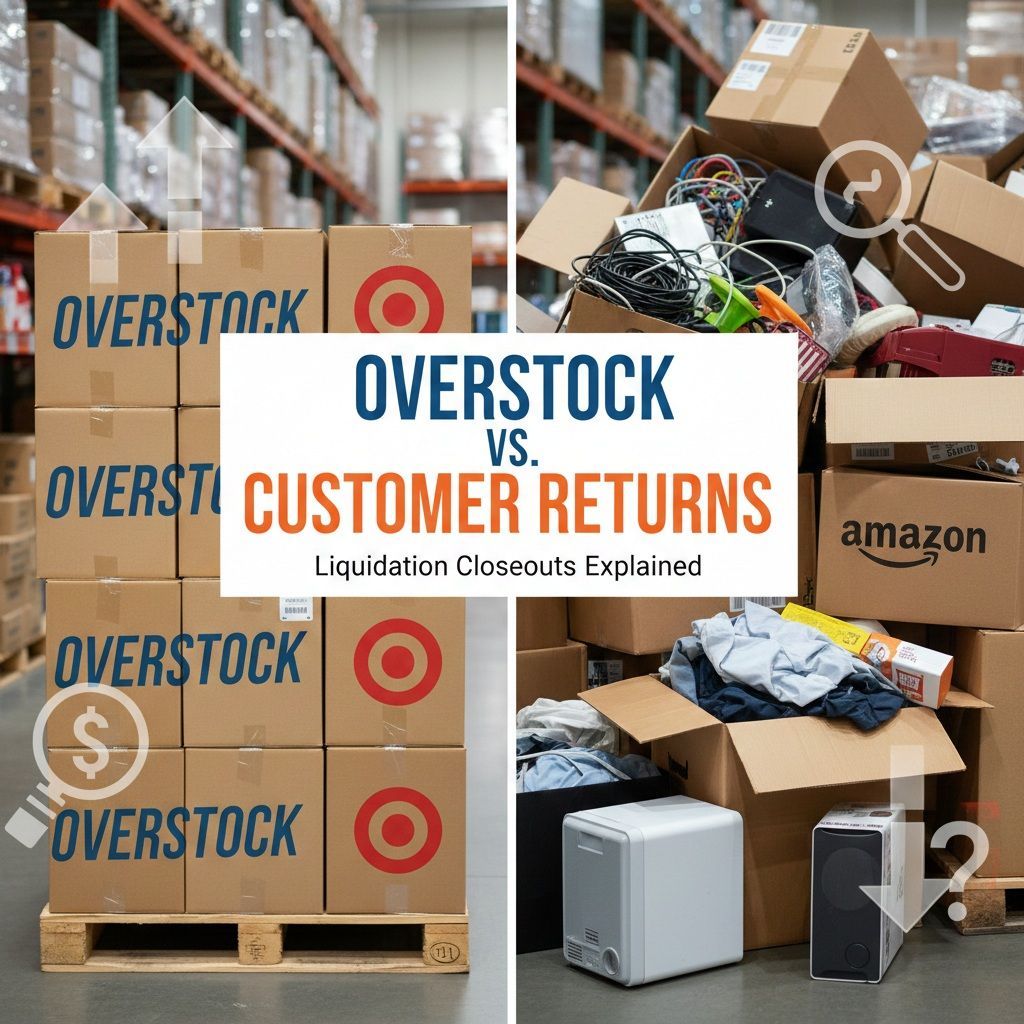
Closeout vs. Liquidation vs. Overstock: What Buyers Need to Know
You ask a supplier for closeouts and he starts talking about manifests and customer returns. Another seller says overstock and means brand-new product in sealed factory cartons. Same industry, three words, and new buyers lose money when they treat them as synonyms.
The closeout vs liquidation question comes down to condition, price and where the goods came from. Get that straight before you commit to a truckload and you'll buy the right product for your store, flea market booth or online account. Here is how each term works and how to choose.
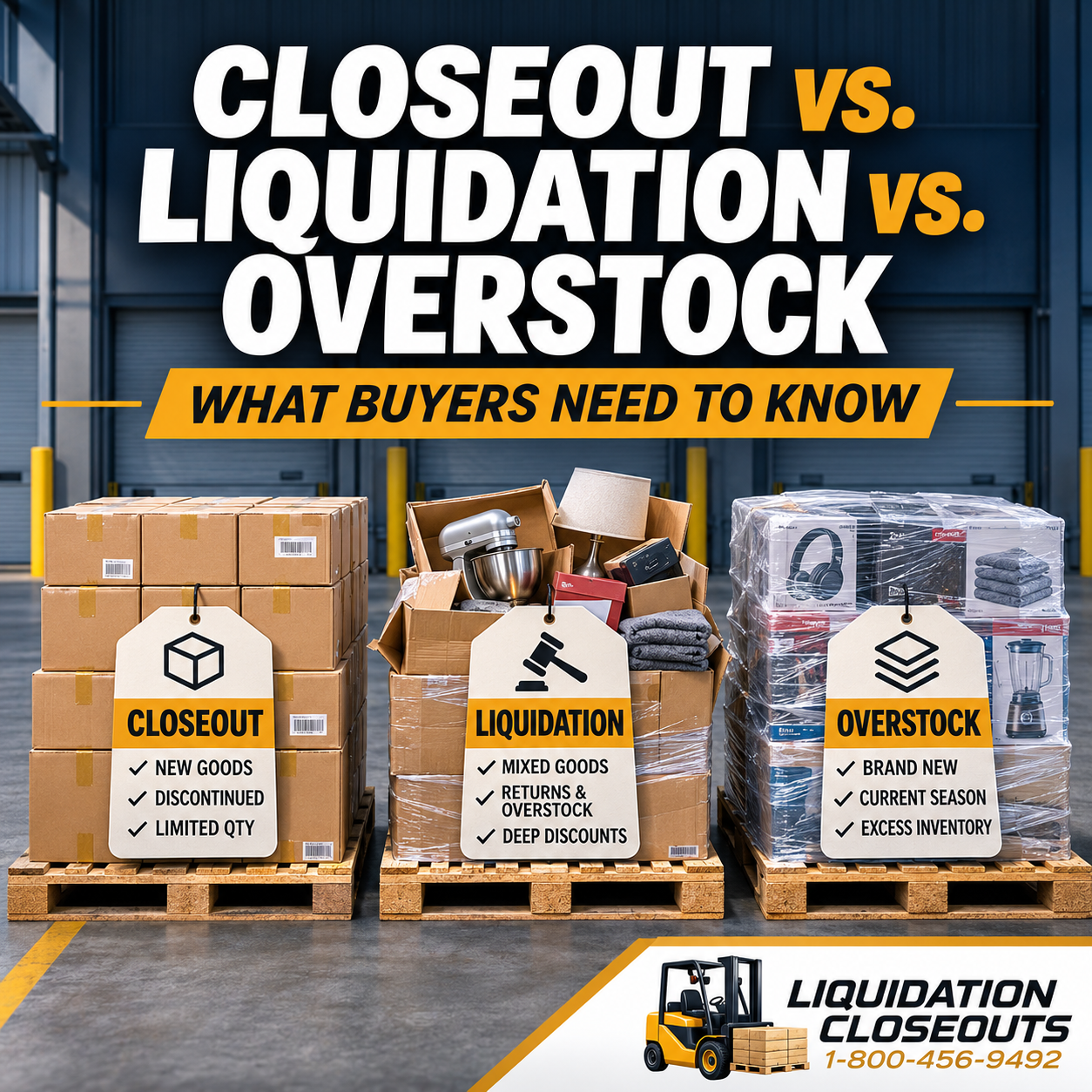
What each term actually means
Here is the short version. Overstock is new product a retailer or manufacturer bought too much of. Closeout is product being discontinued, replaced or dropped from a line, and it is usually new. Liquidation is the broadest bucket: moving inventory fast, which often includes customer returns, shelf pulls and damaged goods.
The terms overlap, which is why sellers use them loosely. A liquidation load can contain closeout and overstock items. A closeout can come out of a liquidation sale when a company shuts down a line. What matters is the condition you receive and how the load is documented. If you want to see how this looks in practice, browse our current liquidation truckloads and compare the load descriptions side by side.
Overstock: new goods, bad forecast
Overstock happens when a buyer at a big box store or a brand orders more than the shelves can move. The product is typically new, in original packaging, and perfectly sellable. Nothing is wrong with it. The seller simply needs the warehouse space or the cash.
That makes overstock the cleanest category for condition. It also tends to carry the highest price per unit of the three, because you are buying near-retail quality. Margins can be thinner, but sell-through is easier since customers can see a normal, sealed product.
One catch: overstock is often seasonal. Think patio items in October or heaters in April. Buying off-season can be smart if you have storage and patience. If you need cash back in 30 days, it can sit.
Closeouts: product the market is moving on
A closeout means the item is leaving the lineup. Maybe the packaging changed, the model was replaced, or a retailer is dropping a brand. The goods are usually new and complete, but you may not be able to reorder the same item next month.
That one-time nature shapes how you buy. Closeouts reward resellers who can sell a lot quickly and don't need consistent re-supply. Discount stores like them because a shelf of mixed brand-name housewares or HBA draws repeat visits. Online sellers like them when the old model still has search demand.
Check dates on anything consumable. Cosmetics and health and beauty items can be closeouts because of a packaging refresh, or because they are close to code date. Ask which one it is before you buy.
Liquidation: the widest range of condition
Liquidation is where the biggest price gaps and the biggest surprises live. A single liquidation load might be shelf pulls, returns, open-box items, store-damaged freight or a blend. Retailers like Target, Amazon, Home Depot, Sam's and Kohl's all run returns and excess through liquidation channels, and the product mix depends on the source.
Because the condition varies, the price per piece is usually lower. You are paid for taking on the sorting, testing and repair work. A load of returned electronics, for example, needs testing before you list it, and some units will be parts-only.
If you want name-brand big box product without guessing the source, target truckloads are a good example of how a single retailer's mix gets described, from general merchandise to home goods and more.
Closeout vs liquidation: condition, price and sourcing compared
Condition. Overstock and closeouts are mostly new and sealed. Liquidation ranges from new to untested returns to damaged. Always ask for the condition breakdown in writing.
Price. As a general pattern, the cleaner the goods, the higher the price as a share of retail. As an example only, a mixed returns load might sell for a small fraction of retail value, while a clean closeout lot might cost noticeably more. Your actual numbers depend on category, brand and load size, so treat any figure as a starting point for questions.
Sourcing. Overstock and closeouts often come directly from a brand, distributor or retailer clearing a specific item. Liquidation comes through a retailer's returns or clearance pipeline and may be consolidated by a liquidator. That affects how much documentation you get. Manifested loads list what's inside. Unmanifested loads trade detail for a lower price.
Daniel’s Rule: Match the load to your labor. If you can't test, clean or repair, pay more for new closeouts or overstock. If you can, liquidation is where the margin hides.
How to pick the right load for your business
Start with your sales channel. A discount store or flea market booth needs product that looks right on a shelf or table, so closeouts and overstock in housewares, HBA and cosmetics work well. An online reseller who can test and photograph items can handle liquidation returns and make more per unit. If you want a bulk, sort-it-yourself format, bin store truckloads are built for that model.
Next, consider category. Hard goods with clear specs, such as hardware and power equipment, can be easier to grade. Browsing tools truckloads will show you how a single category gets described by condition and mix.
Finally, think about timing. Some loads fit seasonal demand, like the post-holiday reset when retailers clear shelf pulls. For one example of how that cycle works, read about how shelf-pull bedding pallets fit into the Q1 inventory surge.
Mistakes new buyers make
The first mistake is buying on price alone. A cheap load that needs 40 hours of testing isn't cheap if your time is limited. The second is skipping the freight math. Truckload pricing can look great until shipping to your location is added, so get the full landed cost first.
The third is assuming every seller defines terms the same way. Ask whether a load is new, returned, open-box or mixed. Ask whether it comes with a manifest. Ask what happens if the load doesn't match the description.
Last, don't start with the biggest load you can afford. Begin with one you can sell through in a reasonable window, learn the grading, then scale up.
More Related Posts