Selling Liquidation Cosmetics: Expiration Dates, Seals and Resale Rules
A truckload of HBA and cosmetics looks like easy margin on the bill of lading. Lipsticks, skincare, shampoo and fragrance sell at every price point, and shoppers buy them on impulse. Then the pallets land, you cut the wrap, and you find a layer of open testers, melted sunscreen and serums with batch codes you can't decode.
The loads aren't the problem. Skipping the sorting step is. Cosmetics are the one category where a bad unit can cost you more than the margin on it: a refund, a flagged listing, or an unhappy customer. This checklist covers how to read date codes, how to treat sealed versus open items, what to pull before anything hits the shelf, and which channels will let you sell what's left.
Why liquidation cosmetics resale needs its own process
Hard goods either work or they don't. Cosmetics can look perfect and still be a problem. Product ages, heat changes formulas, and anything that's been opened is a hygiene issue no matter how new it looks. Retailers liquidate beauty for all kinds of reasons: seasonal resets, discontinued shades, packaging changes, customer returns, shelf pulls for short dating. Each source gives you a different risk profile inside the same truck.
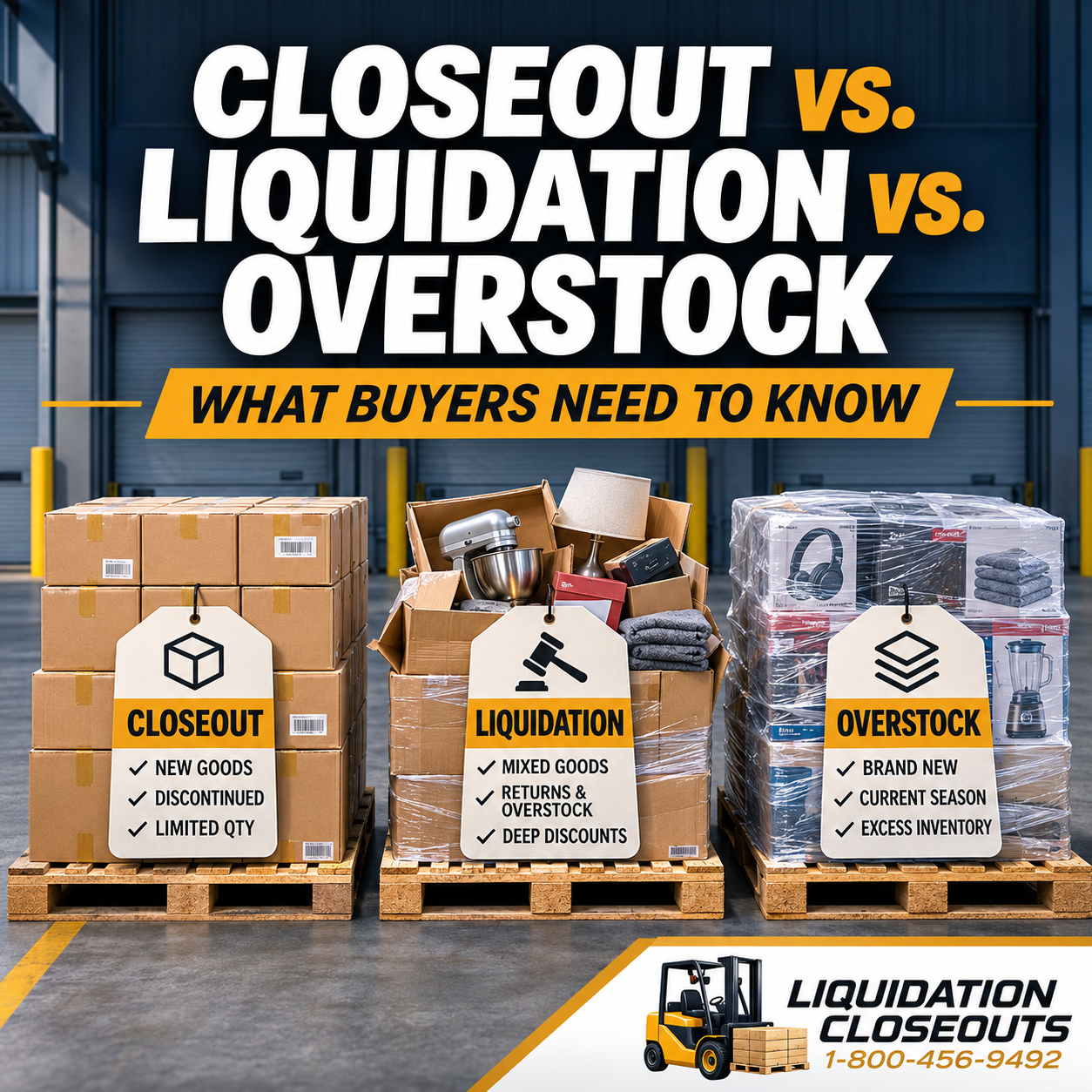
That's why it pays to know what you're buying. Customer-return loads carry more open and used product. Overstock and shelf-pull loads are usually sealed but can be closer to their dates. If you're comparing options, our liquidation truckloads page is a good place to see what's available, and it helps to understand how closeouts, liquidation and overstock differ, because the label on the load tells you a lot about condition.
How to read date codes without guessing
Not every cosmetic carries a printed expiration date. Many makeup and skincare products show a PAO symbol instead, the little open-jar icon with a number like 12M. That number means months of use after opening, not a shelf-life deadline for the sealed unit. Don't treat it as an expiry date.
What you do need is the batch or lot code, usually laser-etched or stamped on the bottom of the tube or the crimp of the box. Brands use their own formats, and many have public lookup tools that convert a batch code into a manufacture date. Spot-check a few codes from each brand in the load before you price anything.
Sunscreens, acne treatments, anti-dandruff shampoos and other OTC drug products are different. They generally carry a printed expiration date. If it's missing or past, pull the item. Treat anything with a visible expiry as a hard stop on the date, and use a consistent cutoff for the rest.
Sealed, open and tester: how to sort each one
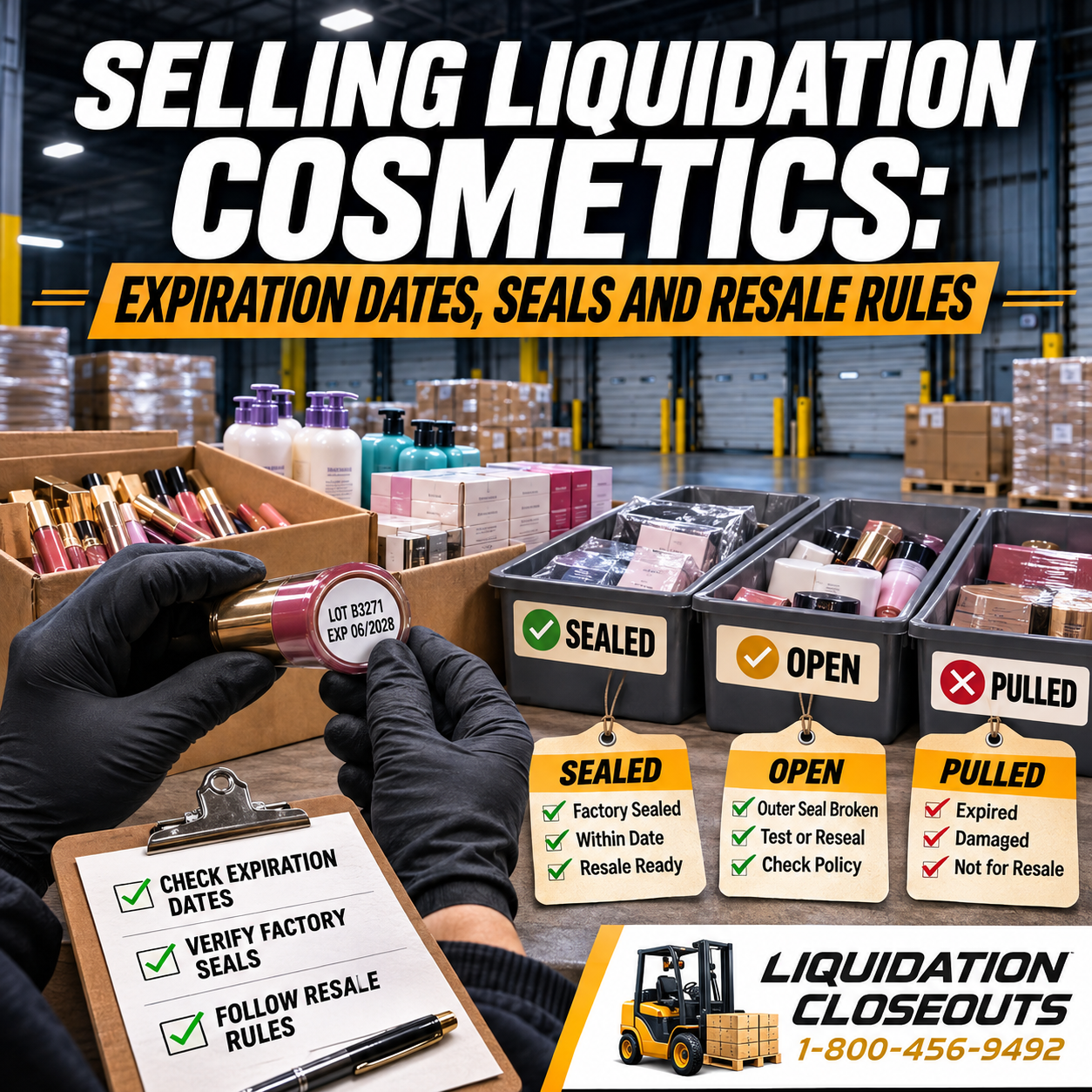
Build three piles on day one. Sealed and intact means shrink wrap, safety seal or box seal is unbroken and the packaging is clean. This is your sellable inventory. Open but unused means the box has been opened or the seal is gone. Used or tested means product is visibly down, smeared, or has an applicator mark.
Be strict about the second pile. A missing seal on a mascara, lip product, or anything that touches eyes or skin is a no-sell for most channels, even if the product looks untouched. Items like hair tools, sealed fragrance boxes, and nail polish with intact caps are a bit more forgiving, but the rule stays the same: if you wouldn't want to receive it, don't ship it.
Testers and "not for resale" units belong in their own bin too. Some are clearly marked on the packaging. If you find them, don't sell them as retail product.
What to pull before shelving
Run every carton through the same filter before it gets a price tag. Pull these items:
Past-date or unreadable-date items, especially OTC products. Heat-damaged goods: separated lotions, warped tubes, discolored liquids, anything that smells off. Leaking or crushed containers, since one broken bottle ruins everything around it. Broken seals on anything that touches face, lips or eyes. Testers and samples stamped as such. And products with tampered, stickered-over or missing labels, because ingredient and warning labels are required information customers should see.
Keep a simple log of what you pull and why. After two or three loads you'll know which brands and categories run clean and which need extra time, and you can price your next buy accordingly.
Daniel’s Rule: Pull anything you'd hesitate to put on your own face. If it doesn't pass that test, it doesn't pass the shelf.
Which sales channels allow cosmetics
Channel rules change, so check the current policy before you list or stock anything. In general, flea markets, discount stores and bin stores are the most flexible, though local health or licensing rules can apply, and sealed product is still the safe standard. Customers there care about price and brand names more than packaging, but they'll walk if something looks used.
Online marketplaces are stricter. Many restrict or ban used and opened beauty items, and some gate certain brands or categories behind approval. Expect to need clean photos, accurate condition notes, and sometimes proof of sourcing. Plan to sell only sealed, in-date stock online and keep the borderline items for in-person channels where a customer can inspect them.
If your model is bins, a mixed HBA load can fit well. Our bin store truckloads are built for that kind of fast-turn, low-price selling, where a sorted mix of sealed beauty and household goods keeps tables moving.
A worked example: what a load really costs per sellable unit
Here's a simple example with made-up numbers. Say you buy a mixed HBA lot of 1,000 units for $2,000, which is $2.00 a unit before freight. After sorting, you pull 12% for past-date, damaged and open items. That leaves 880 sellable units.
Your real cost is $2,000 divided by 880, or about $2.27 per sellable unit. If those units average $6.00 at retail, that's roughly $5,280 in sales. The takeaway isn't the exact margin. It's that pull rate changes your math, so build it into every offer. If you assume zero loss, you'll overpay.
Run the same exercise for each brand tier. A load with a higher pull rate has to be cheaper to make sense, and a clean sealed load can justify a higher price.
A pre-buy checklist for your next HBA load
Before you commit, ask the questions that protect your margin. What's the source: returns, overstock or shelf pulls? Is the product sealed, and are there manifests or photos? What's the typical date range on OTC items? How will it ship, and does the freight protect heat-sensitive product in summer or winter? Get a freight number early with a Get a shipping quote request so the landed cost isn't a surprise.
Retail-sourced loads are a good starting point for beauty. Browse target truckloads if you want recognizable brands and consistent packaging. If you also run a table or store with hard goods, pairing beauty with tools truckloads gives you a second customer base that doesn't carry the same date risk. And if you have questions about condition grades or terms, the FAQs cover most of them.
More Related Posts