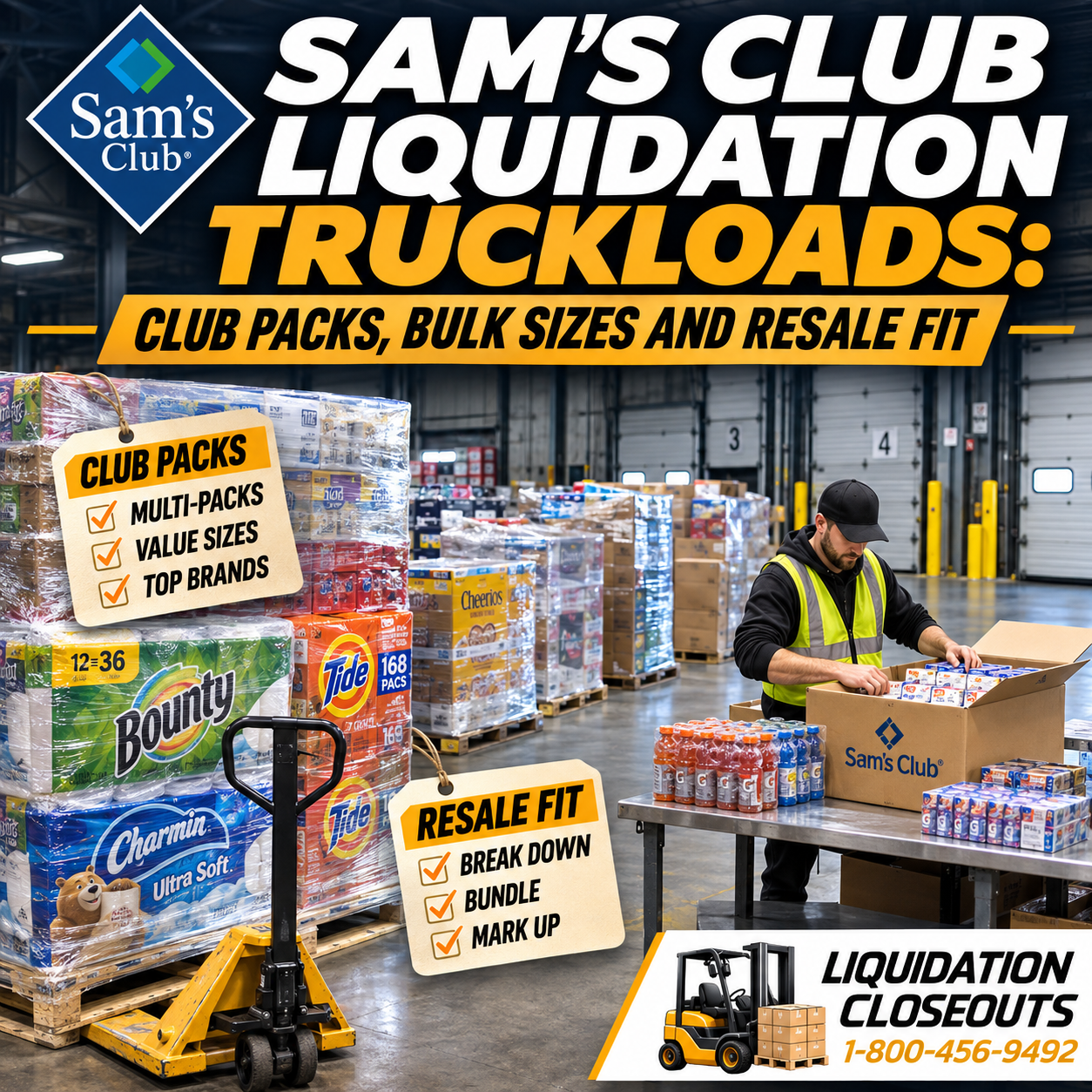
Sam's Club Liquidation Truckloads: Club Packs, Bulk Sizes and Resale Fit
Anyone who has bought from a regular big box liquidation knows what a mixed truckload feels like: singles, small boxes, a lot of variety. Sams club liquidation truckloads are different. The goods come in club-size cases, multi-packs, oversized bottles and shrink-wrapped bundles built for a family's pantry or a small office, not for a shelf at a discount store.
That can work in your favor or against you. If you plan around the pack sizes, you get a low cost per unit and plenty of room to break packs down for profit. If you don't, you end up with 40 cartons of something nobody wants to buy 24 at a time. This guide covers what to expect, who it suits, and how to do the math before you book a load.
What Sams Club Liquidation Truckloads Look Like
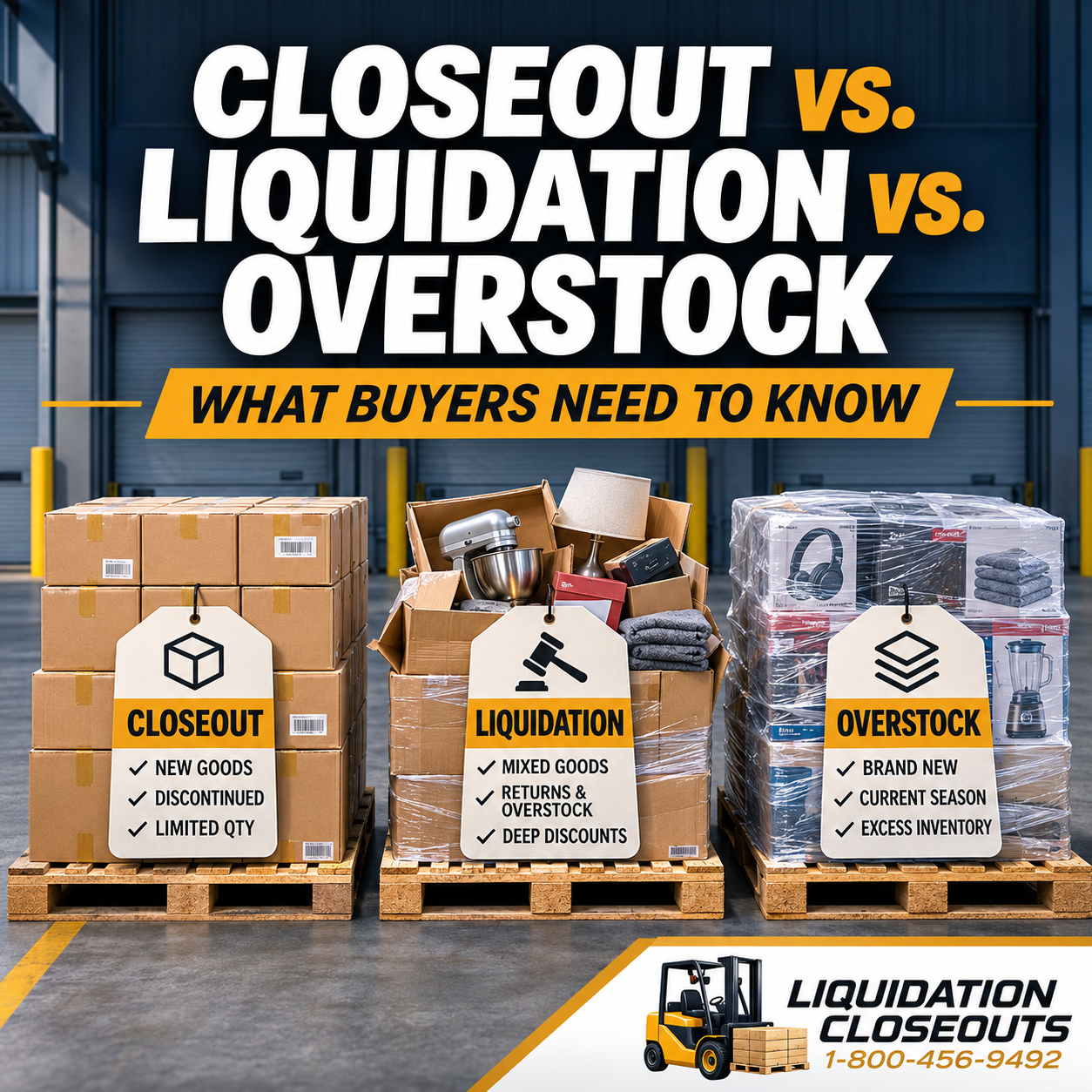
Club merchandise is packaged around quantity. Think multi-packs of household goods, large-format health and beauty items, bulk kitchen and storage products, seasonal pieces, and a steady mix of electronics and small appliances. Loads typically ship palletized, with many cases still sealed in the original club packaging. Condition varies by load: some are shelf pulls and overstock in new condition, others include returns and customer-damaged freight.
That packaging is the main thing separating a club load from other retail sources. A pallet of club packs holds fewer separate SKUs than a pallet of mixed singles, so your per-unit cost can be low, but your sell-through plan has to account for the pack size. If you prefer unsorted, mixed-category freight you can sort and price yourself, look at our bin store truckloads for comparison. Club loads tend to be more organized and more uniform.
Club Packs and Bulk Sizes: Where the Margin Hides
A club pack is a built-in margin opportunity, because the retail price per unit inside a big pack is usually lower than the same item sold individually elsewhere. Shoppers at a flea market or small discount store often don't want 24 of anything. They want two or three, at a price that feels fair. That gap between how it was packed and how people actually buy is where you earn.
The flip side is that some products don't split well. Items with a single outer wrap, safety seals or required labeling can lose value once you open them. Before you buy, ask yourself: can I legally and cleanly sell this in smaller units, and will the inner packaging stand on its own? If the answer is no for a large share of the load, it better suit a buyer who can move full cases.
Which Resellers Sams Club Truckloads Fit Best
Discount and dollar-style stores are a natural match. Staff can re-bag or re-bundle packs into price points that fit the store, and consumables turn quickly. Storage space matters, though, because bulk cases take up room until you open them.
Flea market and swap meet sellers do well with bulk because they sell in volume on busy weekends and can sell by the piece, by the pair or by the bundle. A table with clear "3 for" pricing moves club-pack goods much faster than a full-size carton ever will.
Online resellers can work it too, but be selective. Full sealed multi-packs sell well as multi-packs on marketplaces, while split packs need clean photos and honest listings. Heavy, bulky items eat shipping profit, so check dimensional weight before you list anything oversized.
How to Break Down Large Packs for Profit
Start with your cost per unit, not your cost per pallet. Take the landed cost of the load, divide it by the number of sellable units, and then decide how to split. Include freight and any labor you'll pay for. If you want a full picture of what goes into that number, this freight, labor and resale costs walkthrough lays out each piece.
Here's a simple example. These numbers are for illustration only. Say an 8-count box of LED bulbs lands at $1.10 per bulb, or $8.80 per box. You split it into four 2-packs and sell each at $3.99, which brings in $15.96. Add about $0.15 per 2-pack for a bag and label, or $0.60, and your gross is roughly $6.56 per box before your own time and booth or shelf costs. Sell the same box whole at $11.99 and you'd net about $3.19. The split pays better, if you can do it quickly.
Time is the hidden cost. A good rule is to time yourself on the first 20 packs. If splitting, labeling and shelving takes longer than the extra profit justifies, sell those items as full packs and save the breakdown work for products with the biggest spread.
Daniel’s Rule: Daniel's Rule: Only break a pack down if the extra profit per case is worth more than the minutes it takes to open, bag, label and shelve it.
Categories to Watch: HBA, Electronics and Tools
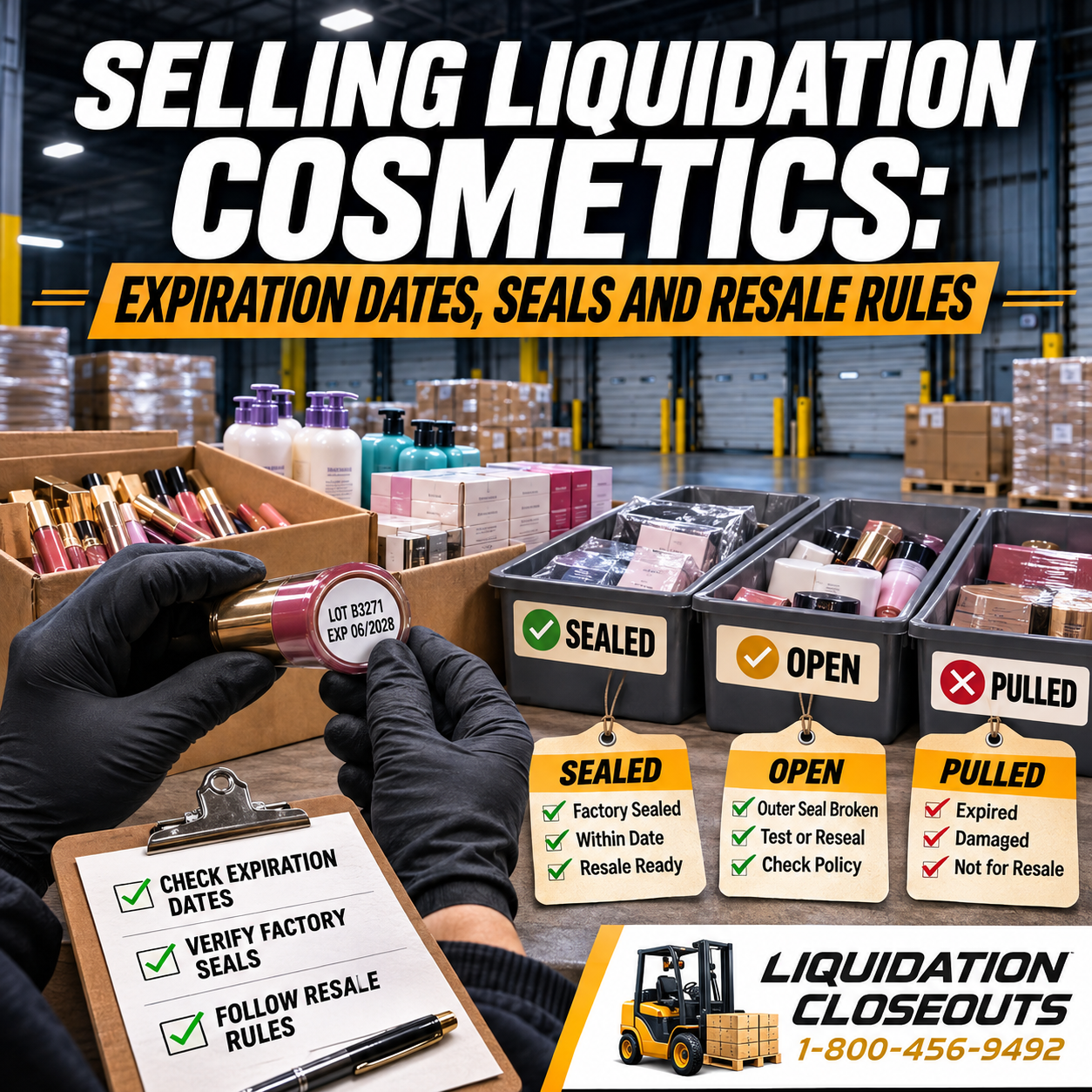
Health and beauty items sell fast but come with rules. Expiration dates, tamper seals and labeling all affect whether you can resell a split pack. Review the expiration dates and seal rules for liquidation cosmetics before you commit to any HBA-heavy load, and check dates on a sample of cases as soon as the truck arrives.
Electronics and small appliances are less about splitting and more about testing. Returns and open-box units should be checked before you price them, and anything you can't verify should be priced as untested. For hardware and workshop items, our tools truckloads are a good companion if your customers also buy bulk-size fasteners, accessories and hand tools.
How Club Loads Compare to Other Big Box Sources
Different retailers produce different freight. Club loads lean toward bulk and household staples. Our target truckloads, by contrast, usually bring more individually packaged, trend-driven items such as home decor, apparel-adjacent goods and seasonal pieces. Many buyers run both: club freight for steady, high-turn consumables, and other retailer freight for variety and impulse sales.
Pick based on how your customers shop. If your repeat buyers come in for everyday essentials at a good price, bulk goods fit. If they come for something new every week, you probably want more variety in the mix.
Before You Book: A Short Checklist
Confirm the condition mix (new overstock, shelf pulls, returns or a blend) and ask what share of the load is sealed club packs versus loose items. Check the manifest for category balance so you aren't buying 30 pallets of one slow product. Plan your storage space, because bulk cases need more room than you think.
Then work out delivery. Freight to a commercial dock is different from freight to a residence or a market stall, and liftgate or appointment needs change the price. Read the FAQs for the basics, and if you already know your destination, get a shipping quote before you commit so the landed cost in your math is real.
More Related Posts